Melting away
On 24 February, Statistics Sweden released new data for deaths (Statistics Sweden 2026a) as well as mean population (Statistics Sweden 2026b) in Sweden during 2025. Official life tables will be released later during March, but one can do preliminary estimates with the method i described 27 March 2023, which tend to come very close to the published ones. According to these estimates, life expectancy at birth for Sweden 2025 was 85.55 years for females, and 82.52 years for males, which implies an increase compared to the 2024 life tables, with life expectancy at 85.35 and 82.29 years for females and males (Statistics Sweden 2025). The accelerated increase after 2023 clearly reflects further decrease in mortality related to covid-19, in combination with relatively modest influenza-related excess mortality.
In my 23 December post, I wrote about the
development of this influenza season in Sweden and UK so far, in the
context of dire warnings about a threatening super flu
, due to the
drifted influenza A(H3N2) subclade K. I noted that influenza in Sweden
had started rising early, but that the relative increase may have
started slowing down already before Christmas, and that neither the
number of cases nor the risk of severe disease, estimated by ICU cases,
seemed exceptional compared to other seasons with early peak. However, I
also noted that the shift to colder weather might lead to increased
influenza activity the coming weeks. Fig. 1 contains an updated version
of the graph in that post, based on data from WHO (2026) up to week 8.1
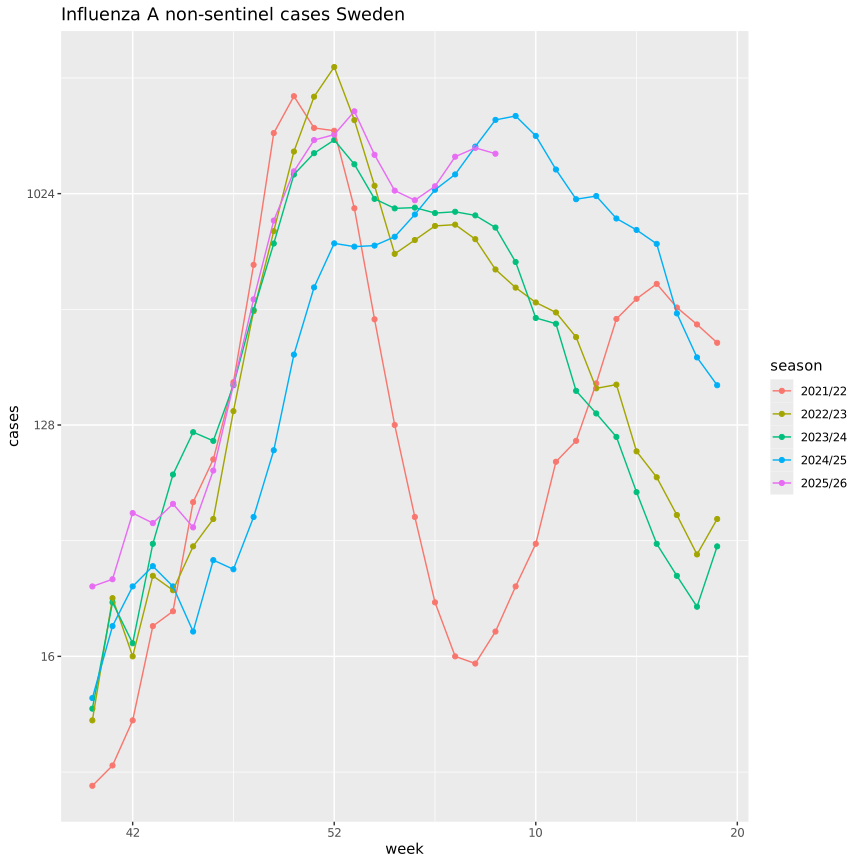
As the figure shows, lab-confirmed influenza A cases peaked week 1, went down and hit a low week 4, and then started increasing again, so that the curve seemed to follow the corresponding weeks in 2025, but hit a second peak week 7, with a slight decrease week 8. A pattern with cases slowing down or decreasing around Christmas and New Year, and increasing from late January, is very common, and clearly related to changes in interpersonal contacts because of Christmas vacation, but the shift to colder weather around Christmas may have shifted the early peak slightly. Overall, the weather in Sweden was mild and humid during the first weeks of December, before the holidays, but relatively cold around Christmas and much of January and February. Had December been mostly cold and dry, we might have seen a large wave then, and relatively few cases after New Year.
For a more detailed look at the relation between influenza and holidays, it can been illuminating to study age- and sex-stratified incidence, as shown by fig. 2, which is based on data from Folkhälsomyndigheten (2026).
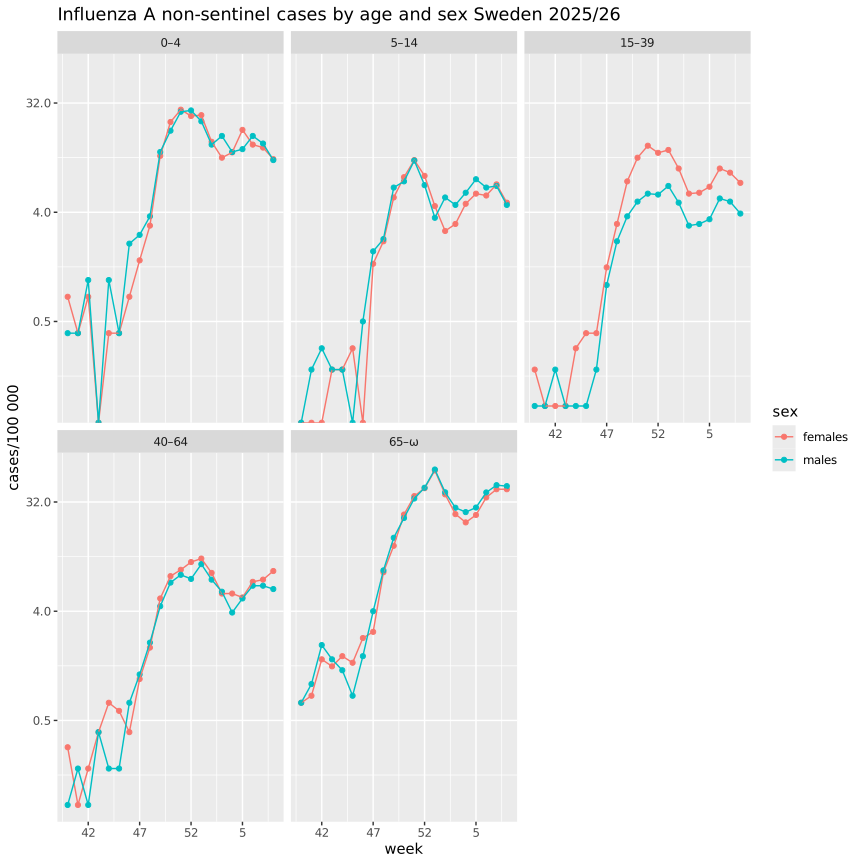
Cases in the age groups below 40 peaked already week 51, and the increase week 1 was driven by the oldest age group, people aged 65 or older. In that age group, contacts with younger generations may have increased during Christmas holidays. For recent weeks, cases in younger age groups have started decreasing again. This decrease may be accelerated the weeks to come, because of milder weather again, and also Winter vacation, which is during week 8 or 9 in most parts of Sweden2, and will then probably spread to older age groups. Sex differences in lab-confirmed influenza within age groups are generally small, but the incidence is significantly higher among females than among males in the age group 15–39. This is, as might be expected, similar to the pattern for influenza hospitalizations, which I have written about before, for example in my Swedish 25 November 2024 post.
Cumulative ICU admissions with influenza are now at 295 for this season (Svenska intensivvårdsregistret 2026). With a continued decline in infections expected the coming weeks, it seems plausible that the season will end up at around 400 cases, like most seasons from 2015/16, except for those wholly or partially interrupted by pandemic-related contact changes.
References
The figures may be reproduced in R by cloning the blog repository and running
2026-03-01-melt.shin the subdirectorypostdata/2026-03-01-melt.↩︎Already during the 1950s, when this vacation, first instituted for energy-saving reasons during World War II, was to be made permanent, some argued that it would help mitigate the spread of infections common during that part of the year (Hoppe 2011).↩︎